


Specific information
Image gallery
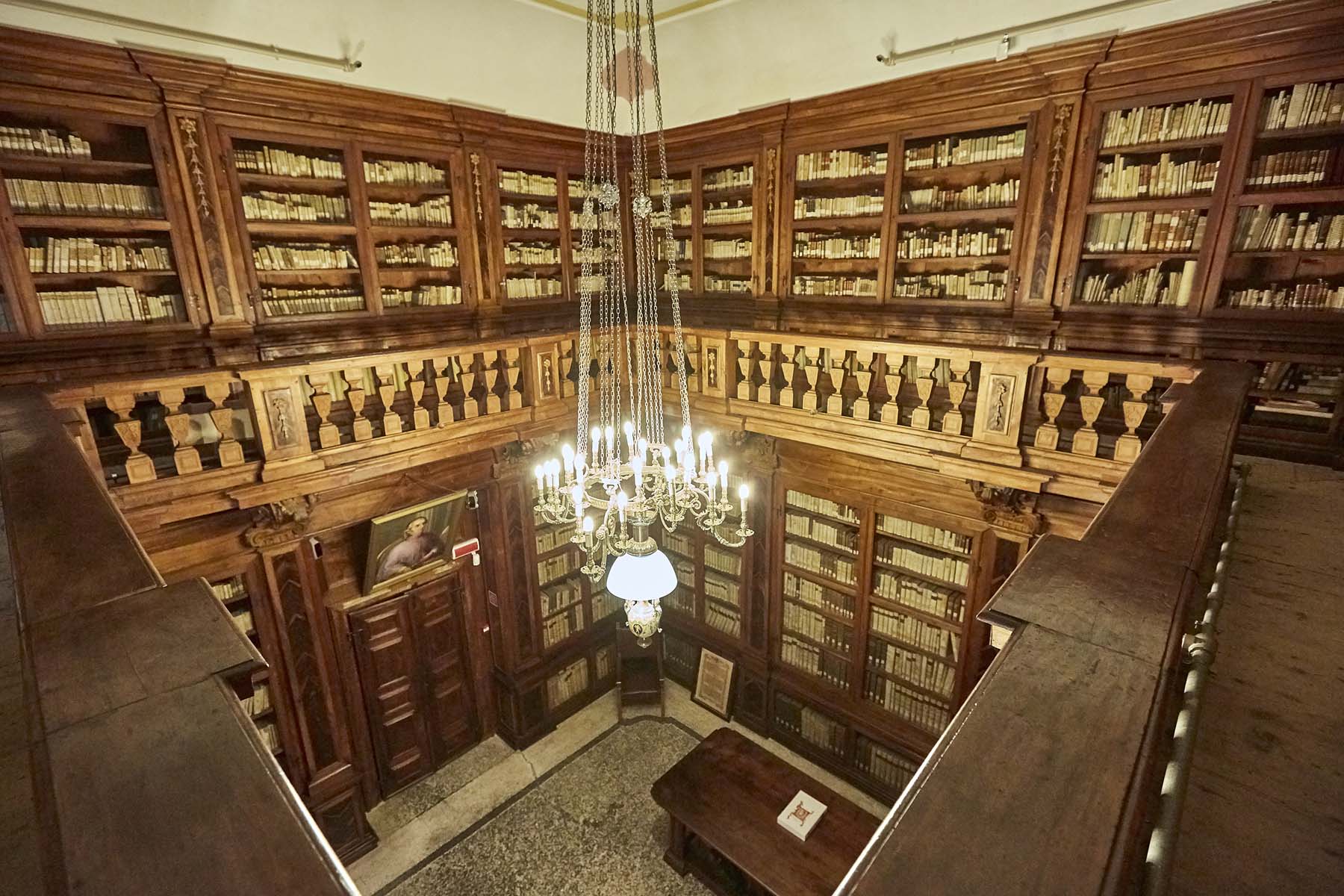
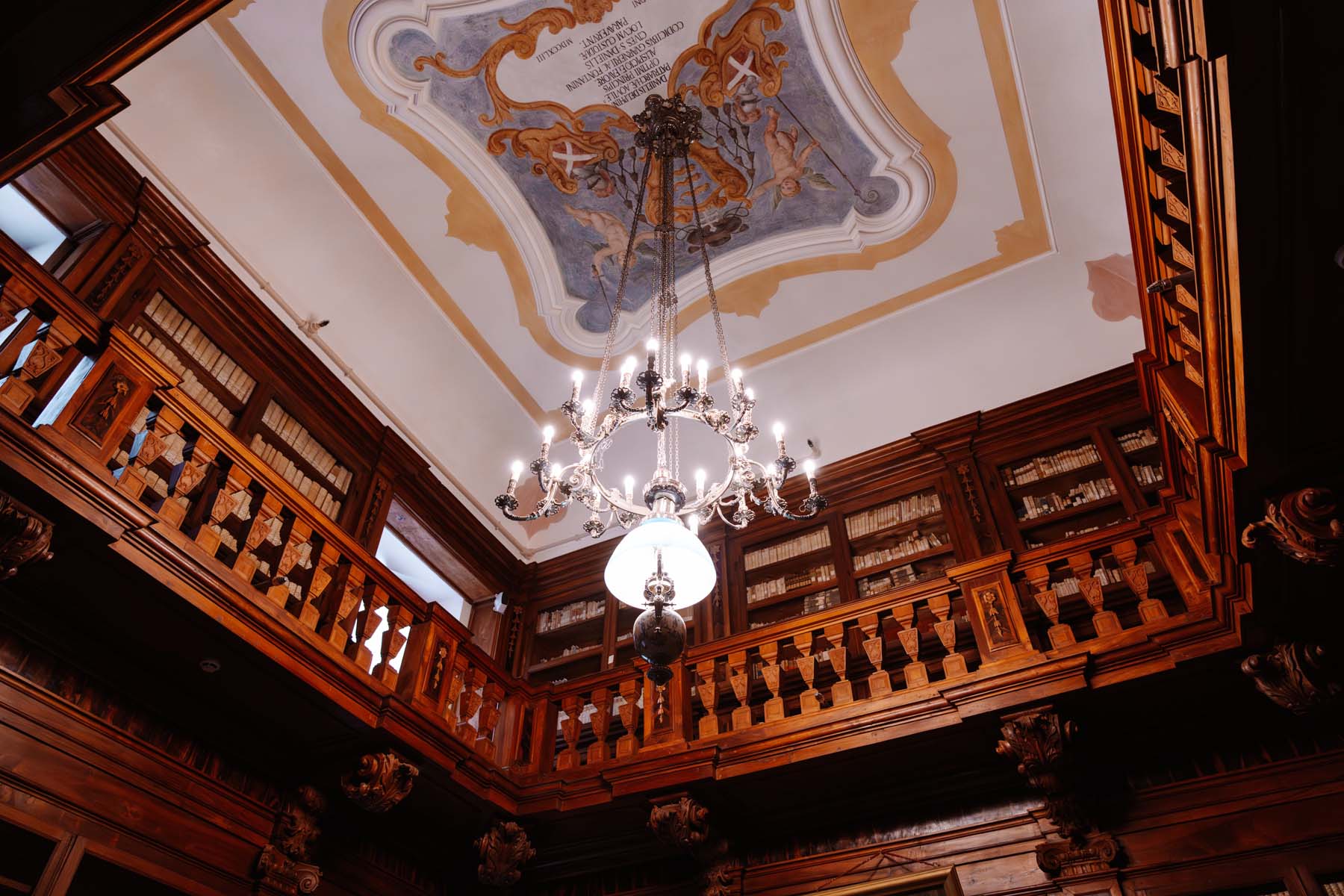
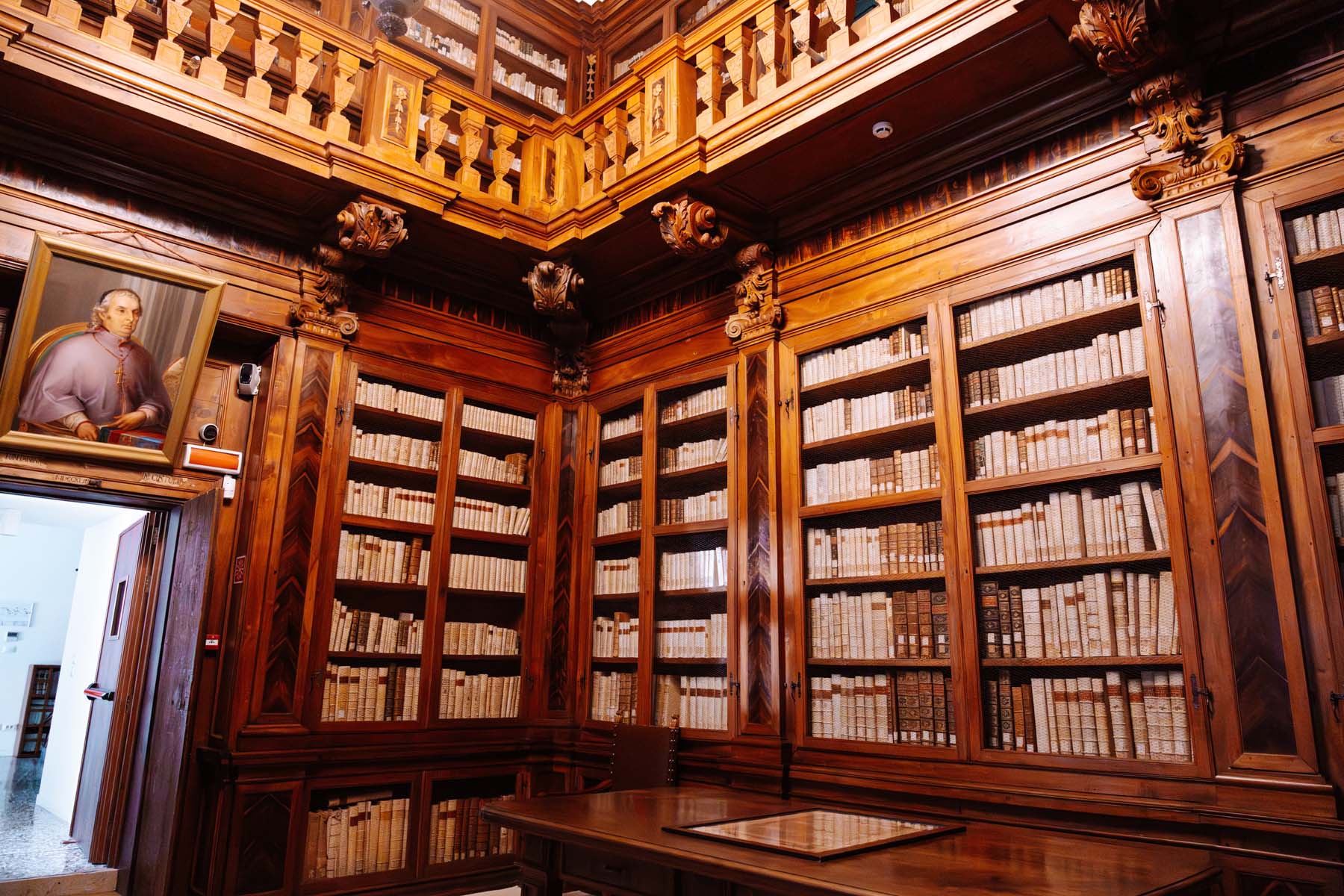
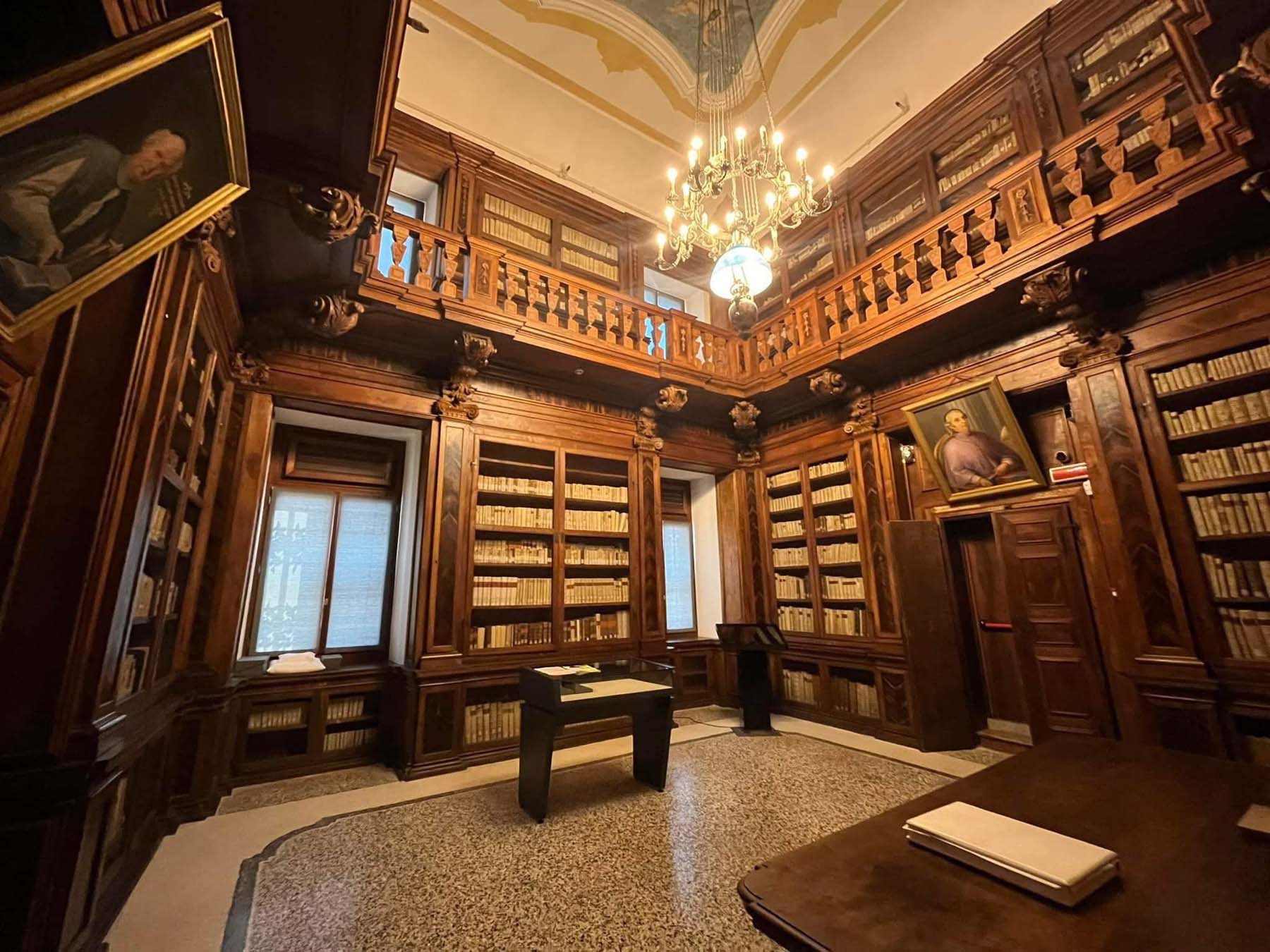
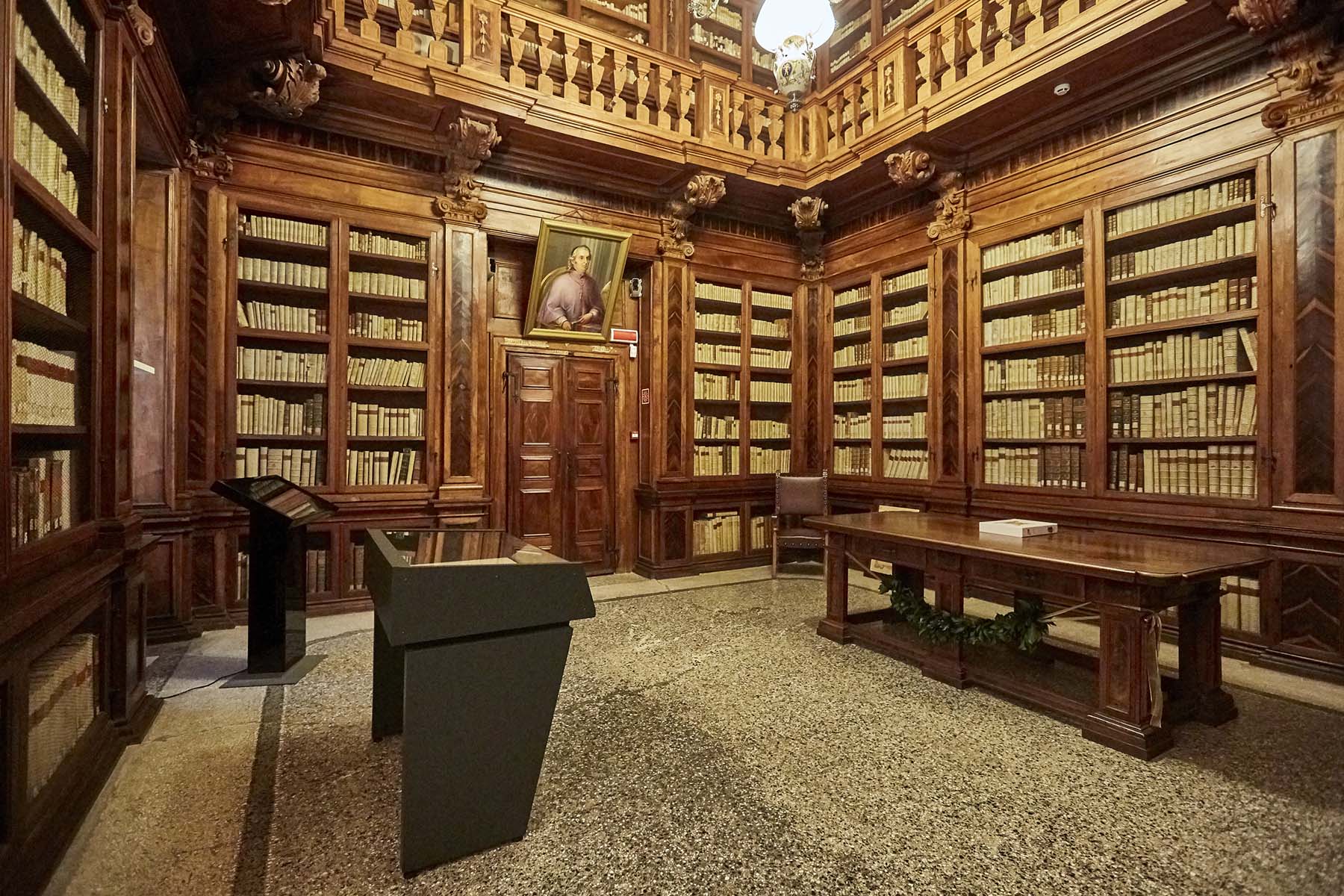
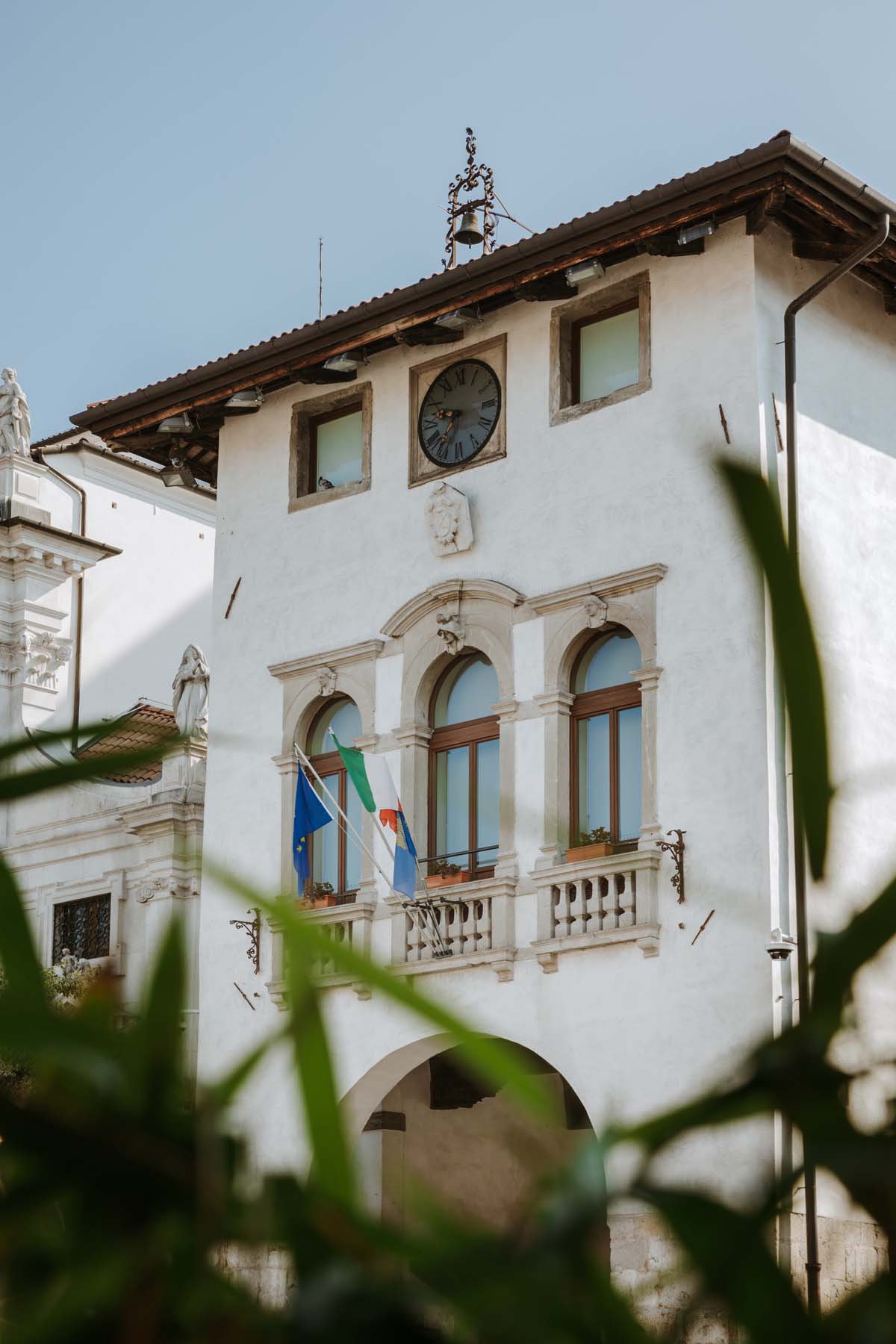
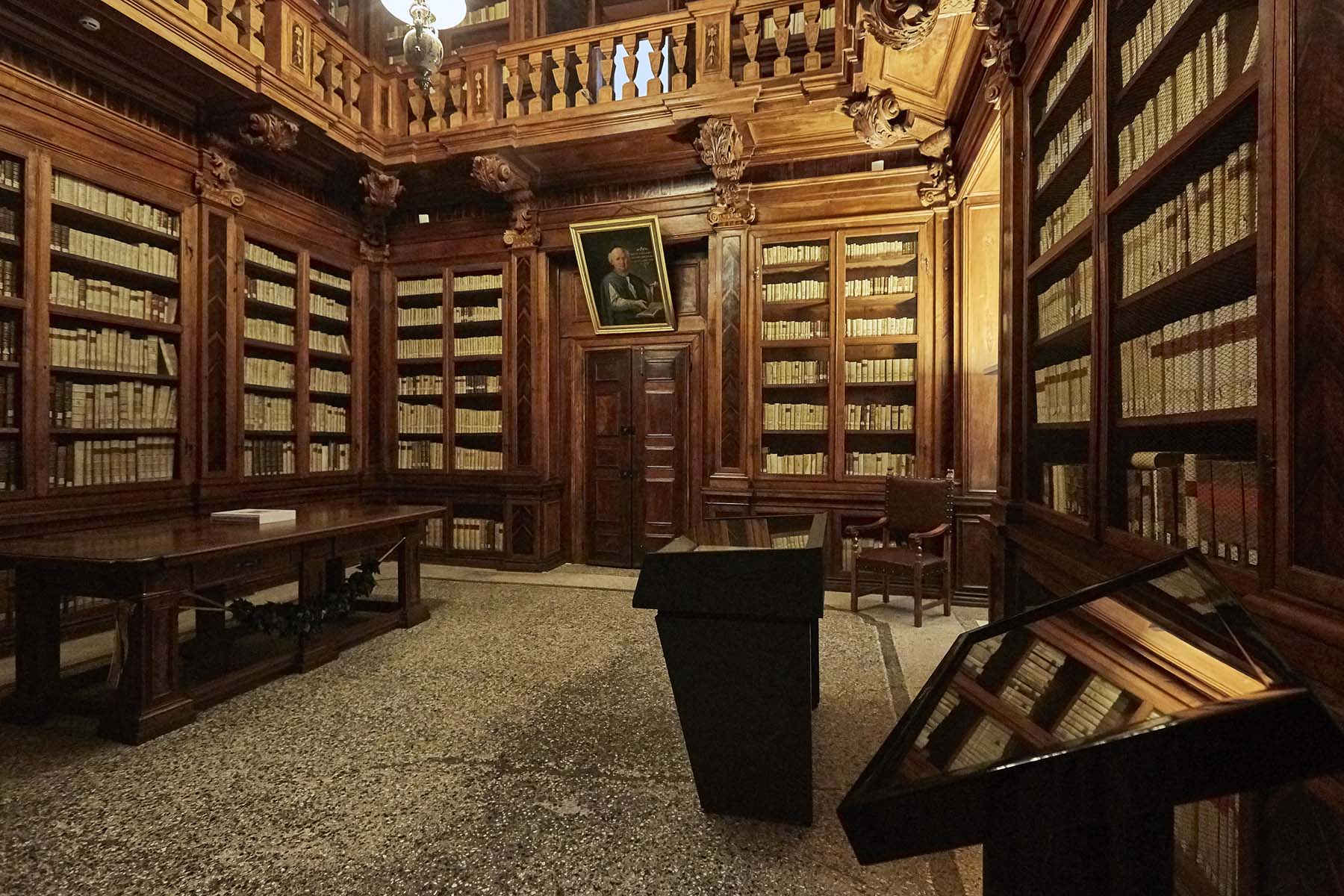
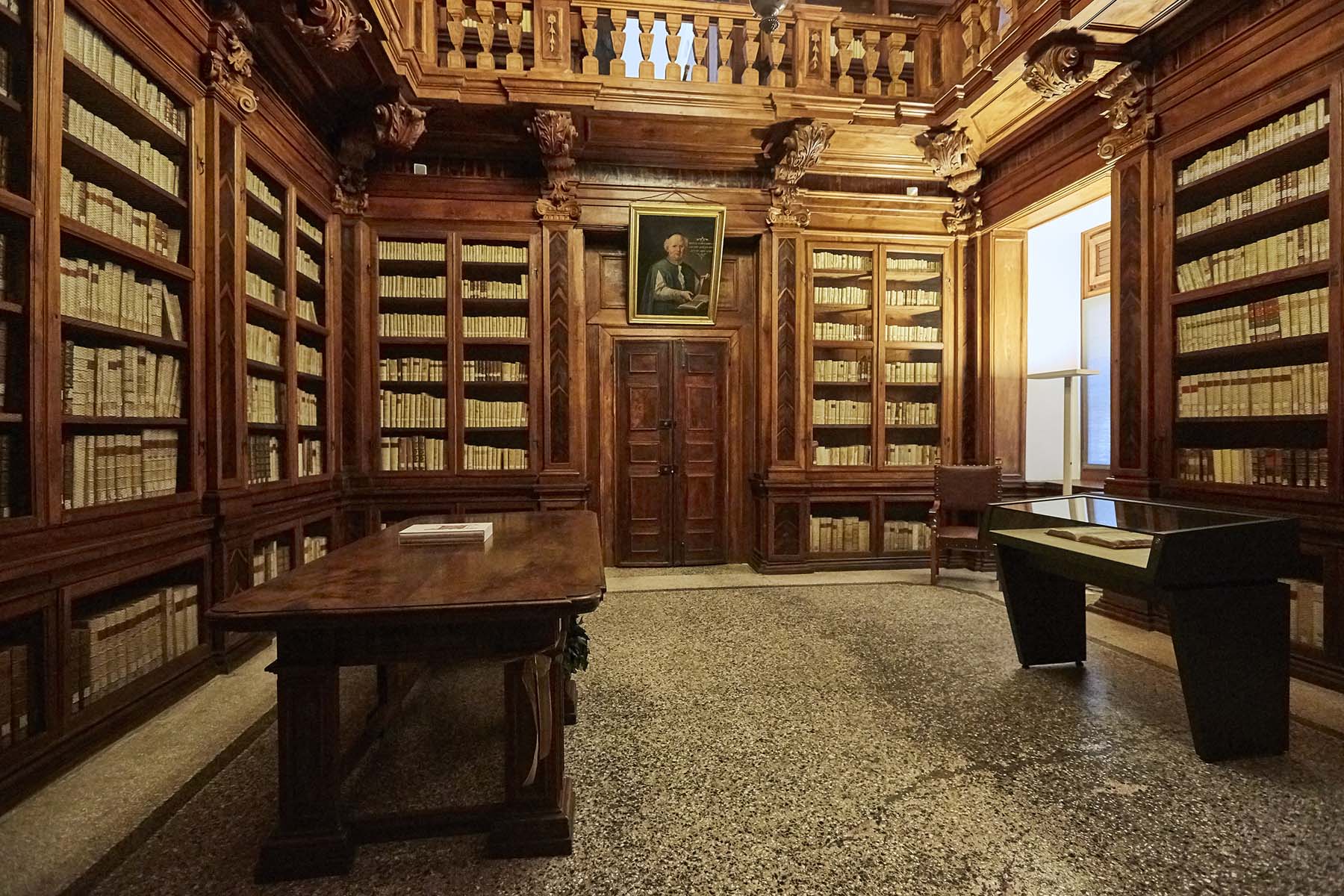
The palace
Next to the Cathedral, on the right, stands the building erected in the fifteenth century and originally the seat of the Municipality and the court.
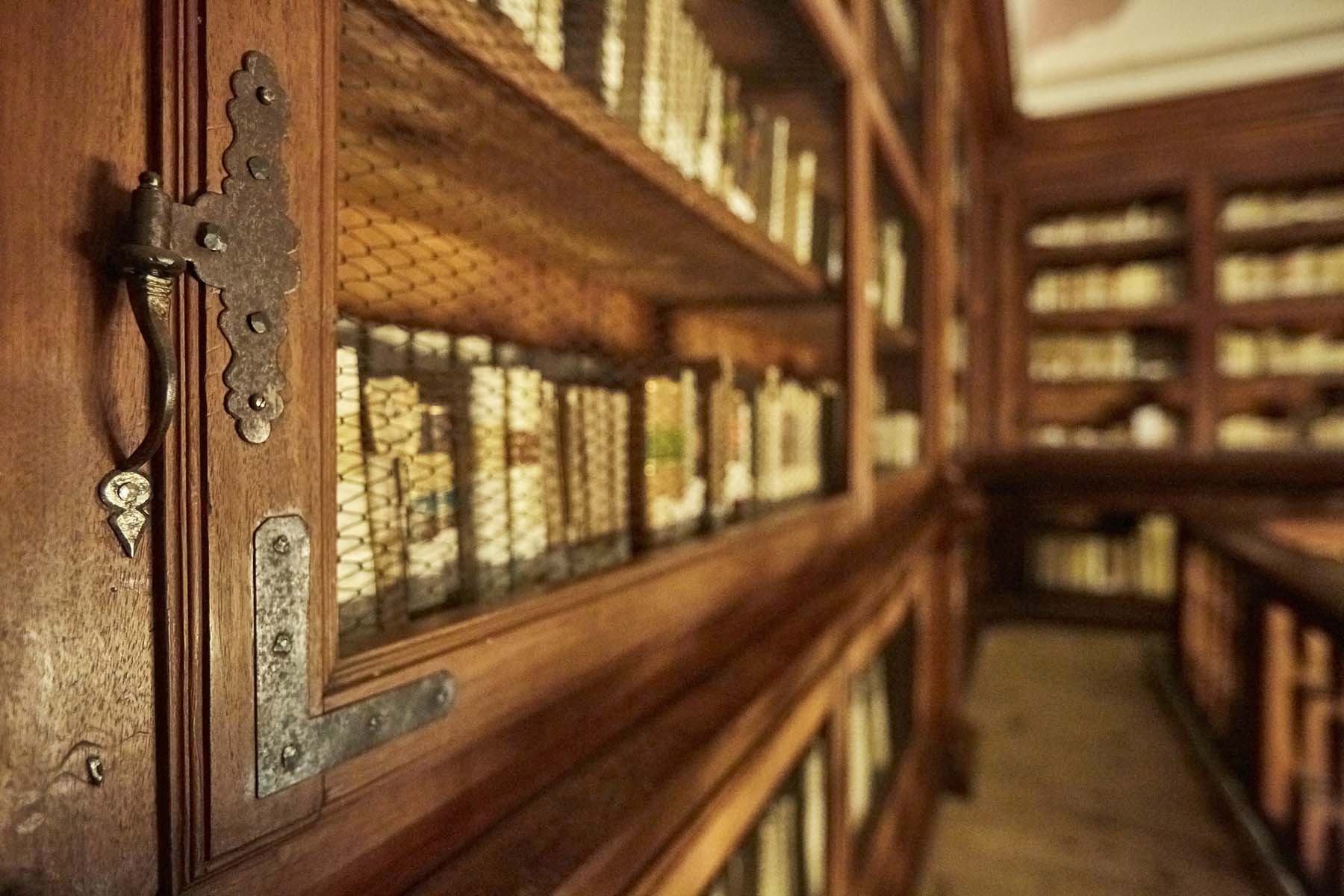
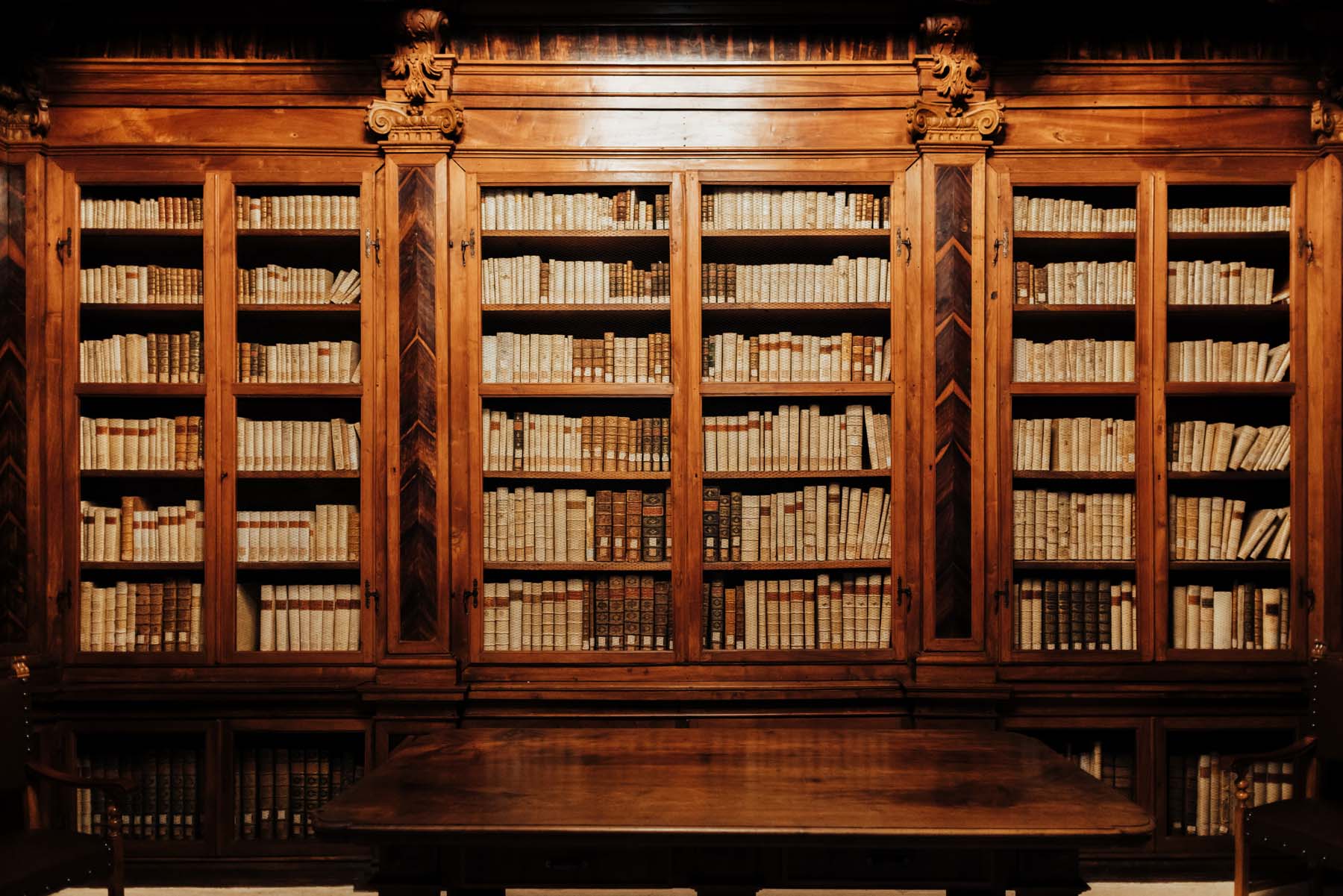
In 1466, the humanist Guarnerio d’Artegna, patriarchal vicar and parish priest of San Daniele, left 165 invaluable codices from his library to the community of San Daniele in his will, on the condition that they be accessible to all. Thus was born the first public library in Friuli and one of the first in Europe, housed in the town hall.
The initial endowment was later supplemented by thirty codices donated by Peter of Cattaro, and in 1736, two thousand printed books and one hundred and one manuscript volumes donated by Giusto Fontanini, the bishop of San Daniele, who also left the municipality the sum necessary for the expansion of the building.
The building was expanded twice toward the bell tower to accommodate the ever-expanding library. The foundation stone of the oldest section, featuring the five arches of the loggia, was laid on July 3, 1415. The second section, which today houses the Guarneriana books, was erected in 1738 based on a design by architect Luca Andrioli, who was then engaged in the renovation of the Cathedral. The third section, intended for the archives and chancellery, was built in 1780.
The ancient heritage of Guarneriana
In 1797, during the Napoleonic era, ten of the most valuable codices were stolen on the orders of French commissioner Gaspare Monge. Only thanks to the cunning of the librarian, who feigned forgetfulness, was the damage limited; the stolen codices are currently held in the Bibliothèque Nationale de France in Paris.
The ancient collection also includes approximately 80 incunabula, including a Codex Justinianus printed in Venice in 1482, enriched by a splendid miniature depicting the Emperor Justinian, a precious Byzantine Bible from the late 12th century, and a manuscript copy of the Divine Comedy from the late 14th century, as well as more than 700 sixteenth-century manuscripts and numerous other works from the 16th, 17th, and 18th centuries, for a total of approximately 12,000 ancient printed volumes.