


Specific information
Image gallery
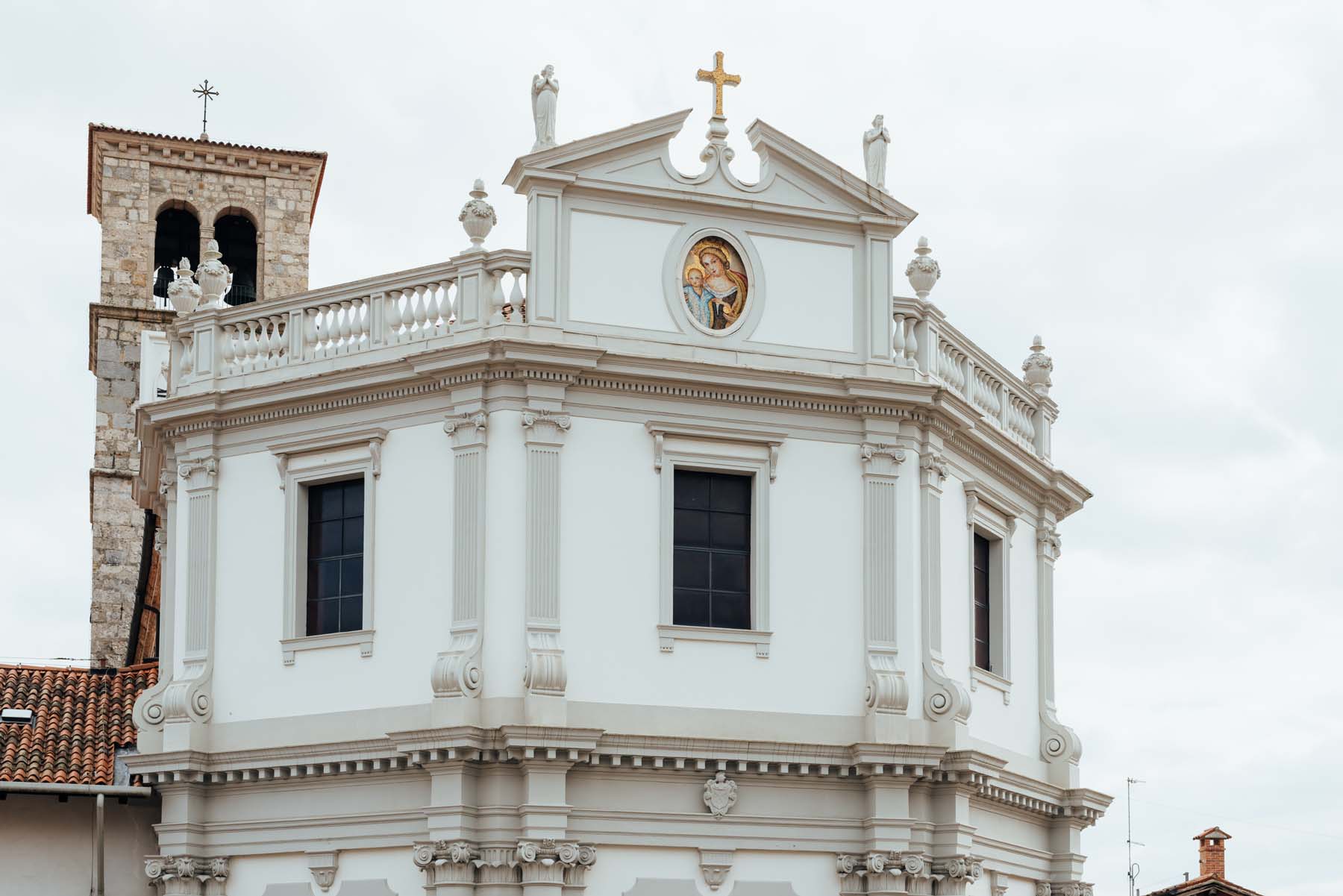
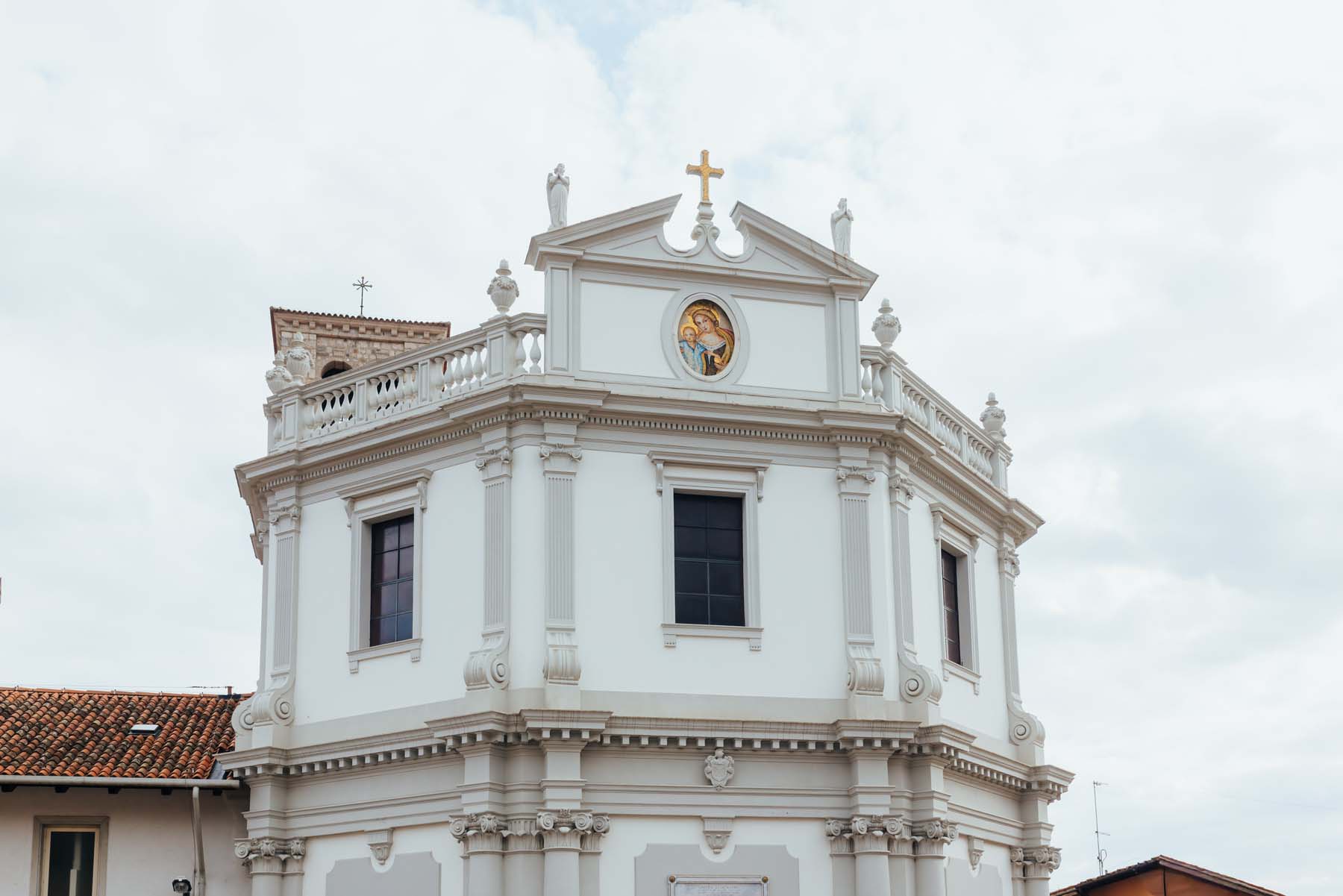
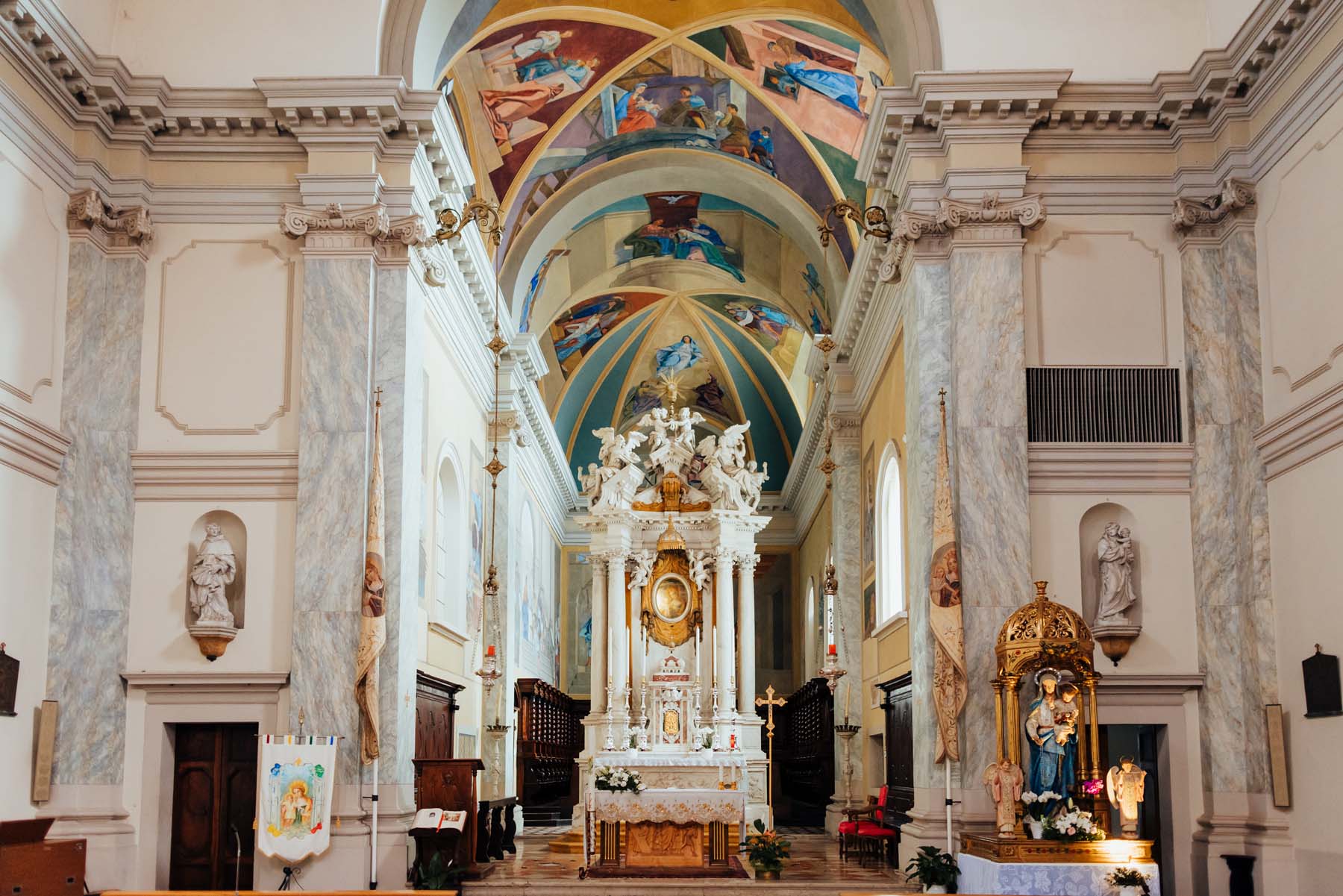
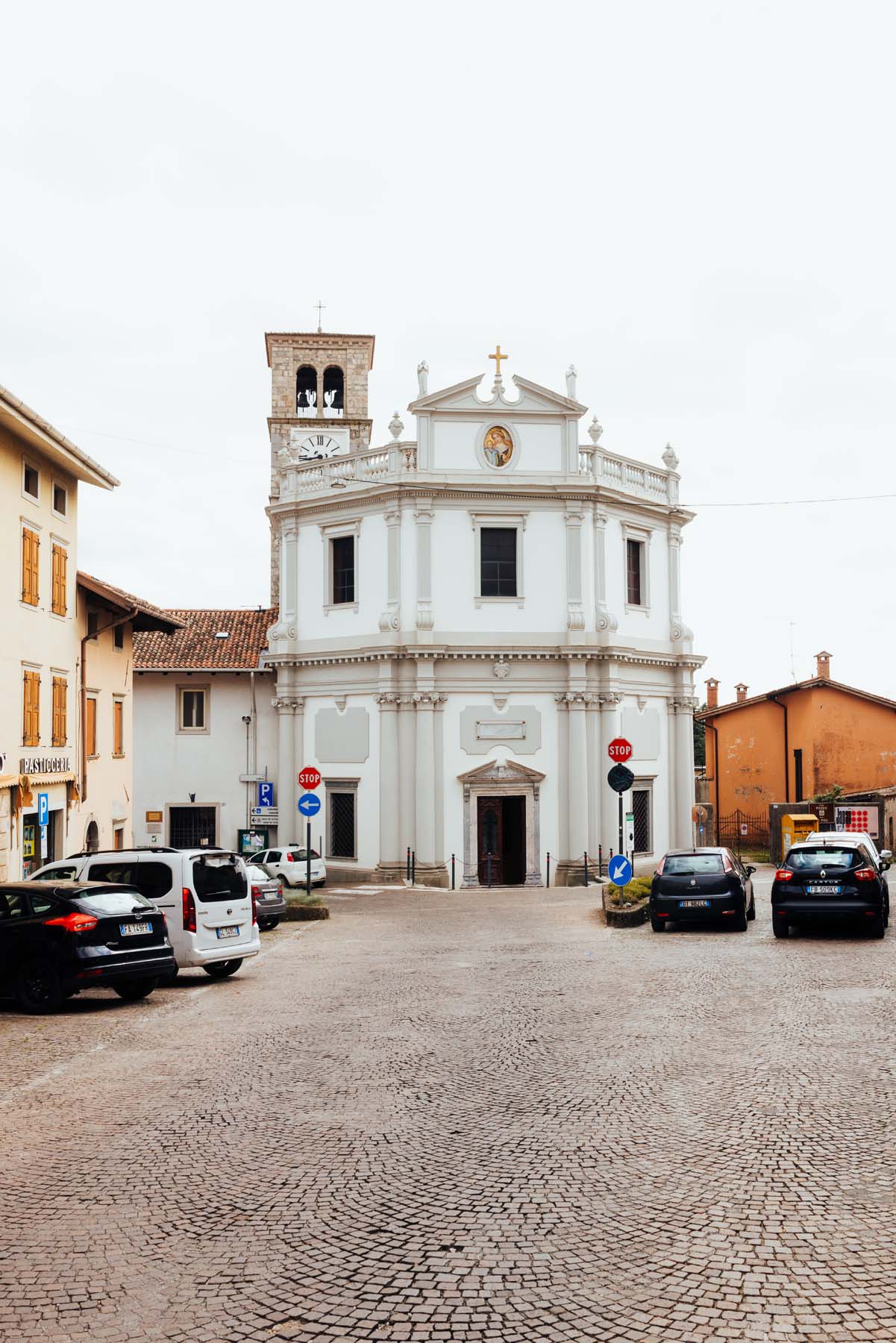
The Sanctuary of Madonna di Strada is one of the most significant Baroque buildings in Friuli and has its origins in a very ancient devotion. In 1056, an altarpiece depicting the Madonna, attributed to an artist named Pellegrino, was painted at a crossroads on Via Germania. The fresco, believed to be miraculous by many believers, was located on the surrounding wall of an old farmhouse known as Braida Sivilotti.
Growing devotion led, between 1636 and 1637, to the construction of the front section of the current sanctuary, designed by the Venetian Bernardino Pontino specifically to house the sacred image. On September 7, 1637, the eve of the Nativity of the Blessed Virgin, the fresco was solemnly transferred to the new church. Towards the end of the 17th century, the Dominicans completed the rear section of the building and built the nearby convent, intended to accommodate the numerous pilgrims from across the region.
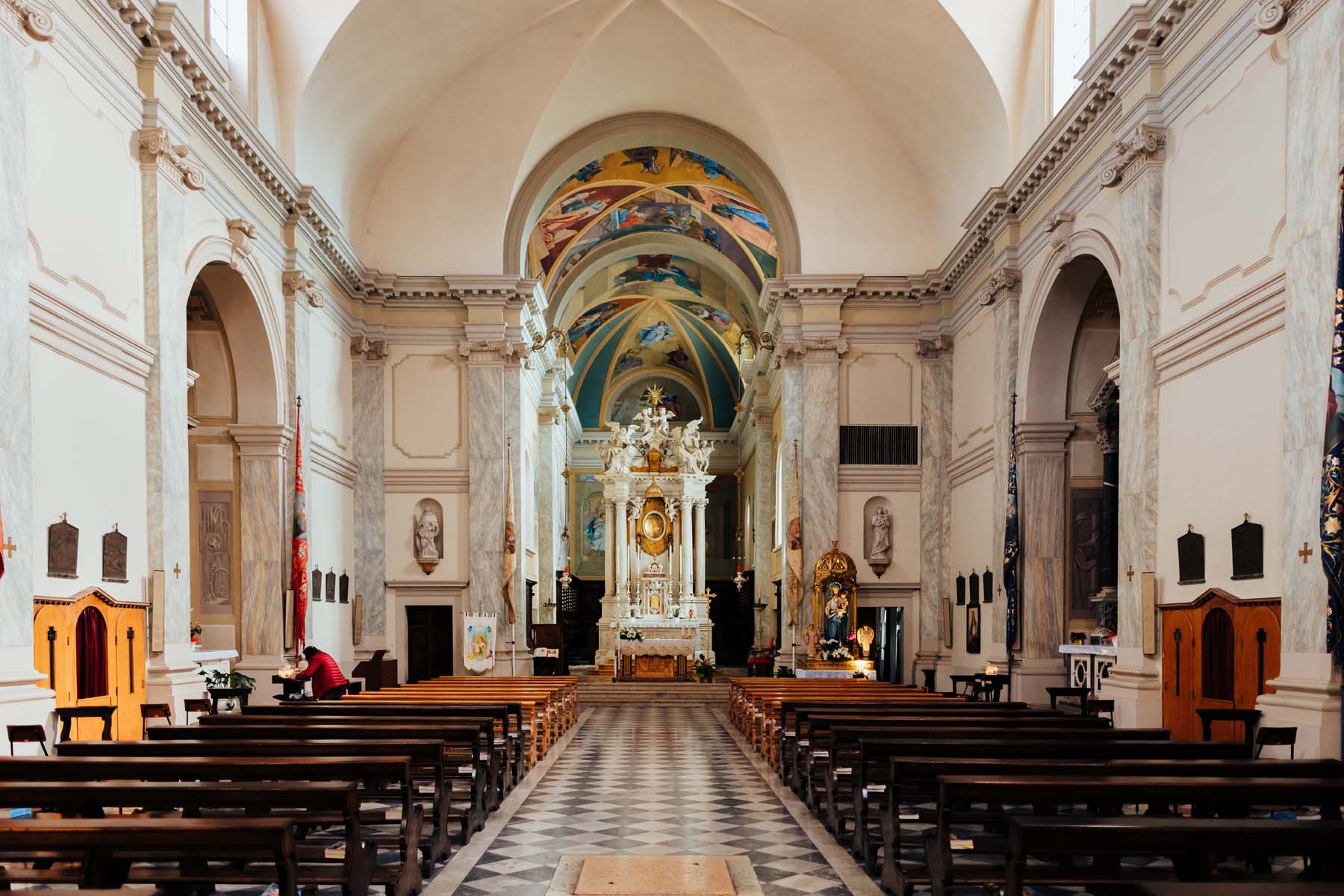
The sanctuary houses important works of art: the 17th-century high altar, attributed to Francesco Fosconi, and the altar of Saint Lucy, erected in 1652 by Count Lucio D’Arcano, next to which is his tomb. In 1849, Don Pietro Conte Cicconi commissioned the artists Pietro D’Aronco and Francesco Contasso of Gemona to create the altar of Our Lady of Sorrows.
In 1882, Saint Daniel transferred one of the four oldest bells in Friuli, the largest bell from the church of Saint Anthony of Vienne, to the bell tower of Madonna di Strada.
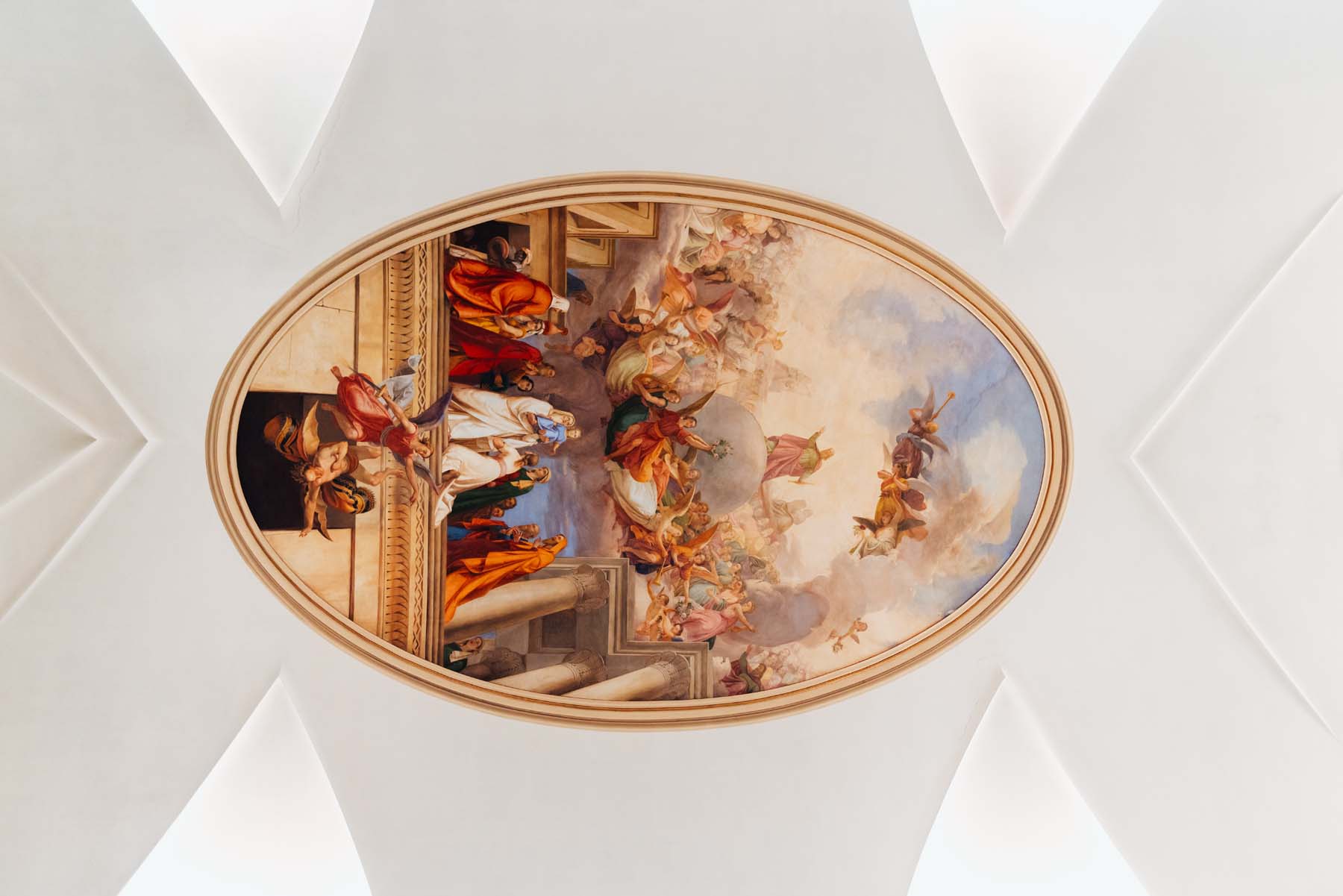
In 1887, the vault decoration was enriched with an oval fresco depicting the Presentation of Mary in the Temple, by Domenico Fabris. Between February 4 and 6, 1918, during the First World War, German troops removed all six bells from the church. During the 20th century, the sanctuary underwent further renovations, including the renovation of the façade by Raimondo D’Aronco.
To this day, the Sanctuary of the Madonna di Strada remains an important place of worship and pilgrimage. Every year in September, the Feast of the Madonna di Strada takes place there, one of the oldest and most heartfelt festivals in San Daniele, dating back to 1636. During the celebration, which combines religious devotion and festivities, the city’s four historic districts—Borgo Piazza-Riuniti, Sopracastello, Sacco, and Pozzo—compete in folk games, keeping traditions alive and strengthening the sense of community.